TwinEdge Spatial Intelligence
Operational GIS for assets, work, telemetry, networks, field routes, and capital plans.
TwinEdge uses GIS as a shared platform layer. It brings spatial context into AssetOps EAM, water and wastewater twins, scheduling, compliance, field work, capital planning, and agentic analytics.
Assets, work, PM inspections, telemetry, alarms, documents, and compliance zones in one map.
Water and wastewater network twins model spatial infrastructure, not flat asset lists.
Scheduling, field routing, capital planning, hazard overlays, and GIS import/export share one spatial layer.
Spatial intelligence in action
Operational maps connected to assets, twins, telemetry, work, and planning.
TwinEdge spatial intelligence gives teams a live operational map with layer controls, selected asset context, digital twin details, work actions, inspections, and water/wastewater network views.
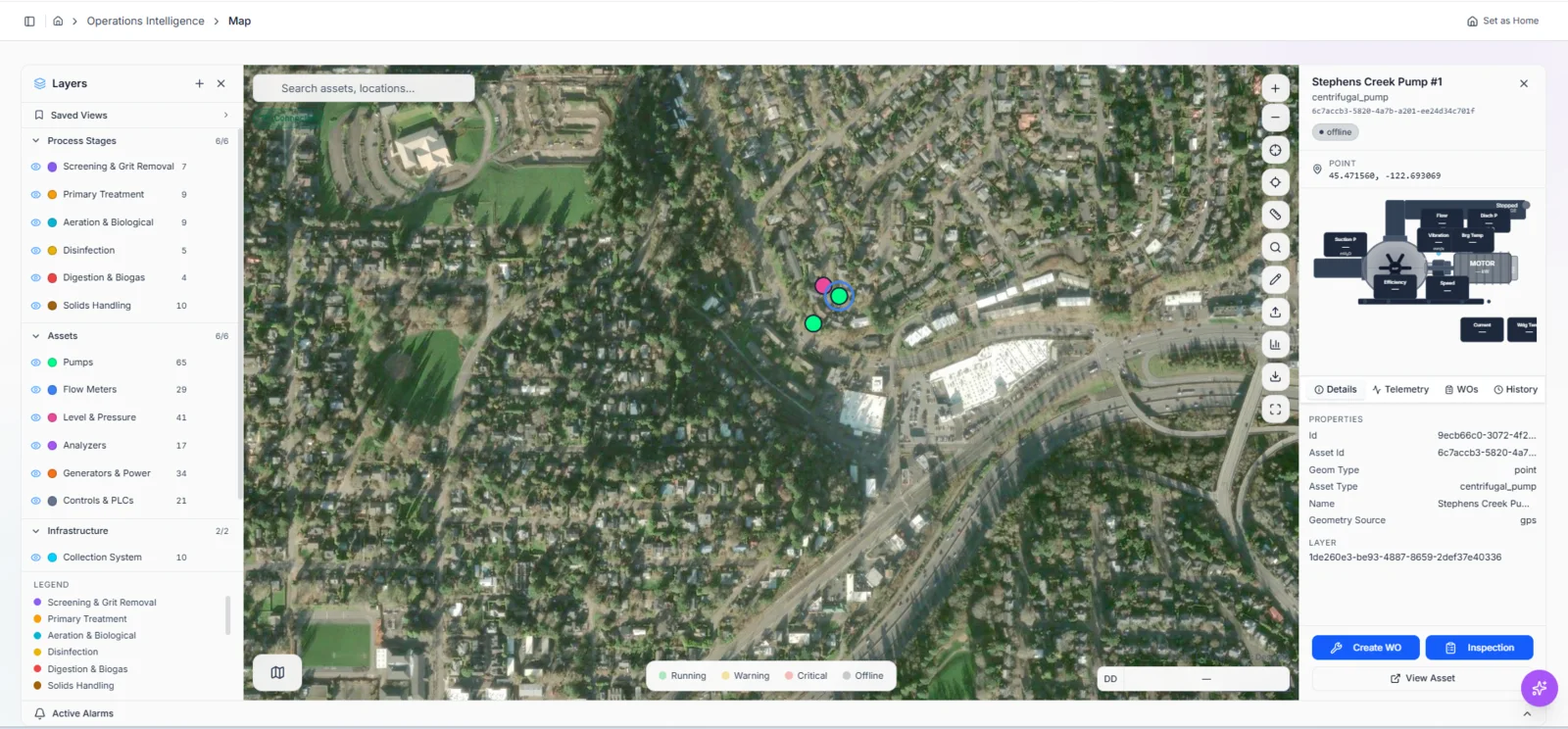
GIS map with asset digital twin context
Layer controls, satellite context, selected asset details, telemetry, work-order creation, inspection action, and digital twin panel in one operational map.
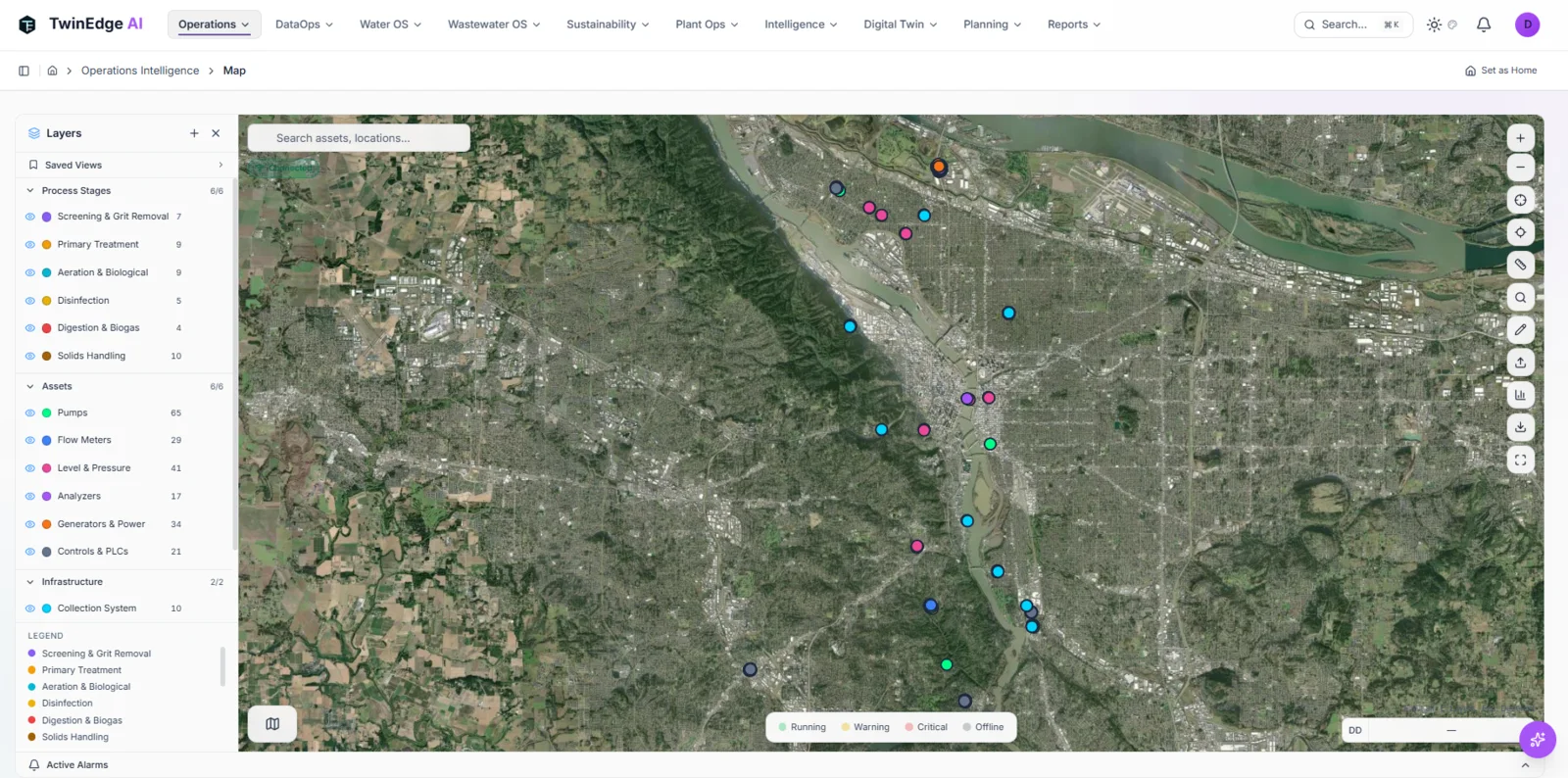
Layer-rich asset map
Process-stage layers, asset classes, infrastructure layers, legends, alarms, basemaps, measurement, and map dashboard controls support field and operations use cases.
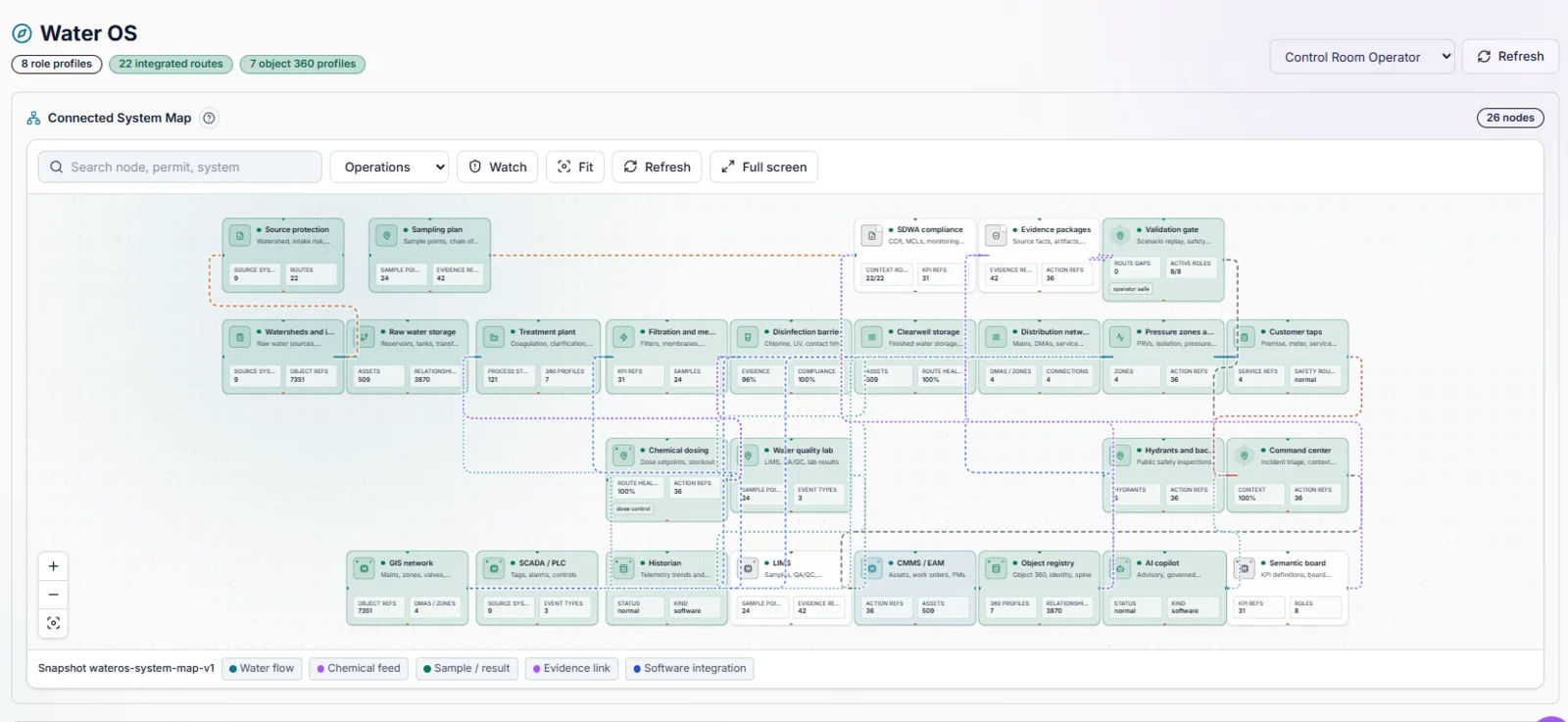
WaterOS connected system map
WaterOS uses spatial and network context for routes, pressure zones, compliance, SCADA, LIMS, CMMS, and AI copilot workflows.
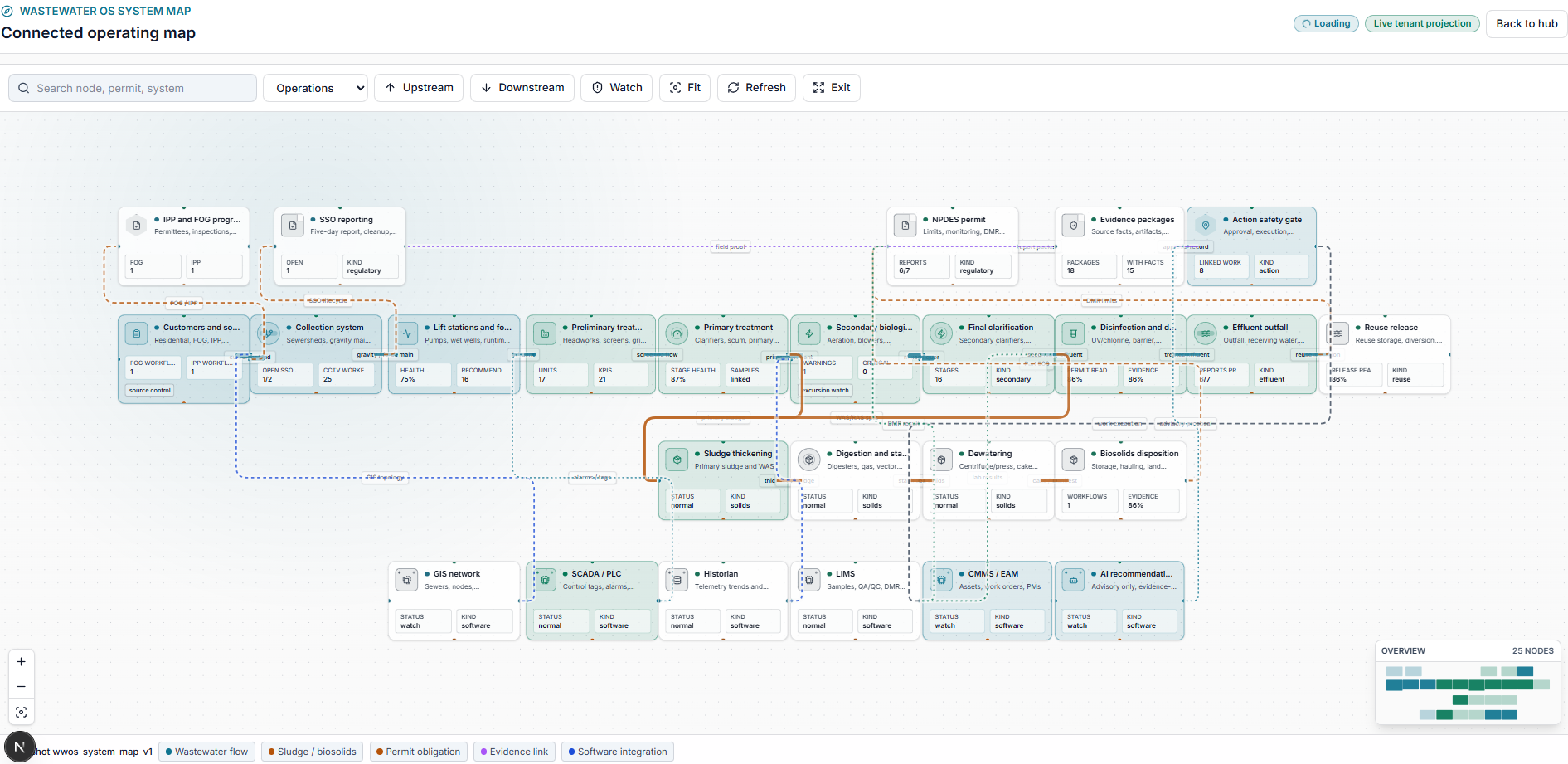
Wastewater OS connected system map
Collection, treatment, permit, evidence, SCADA, LIMS, CMMS, and AI recommendation nodes stay connected in one operating map.
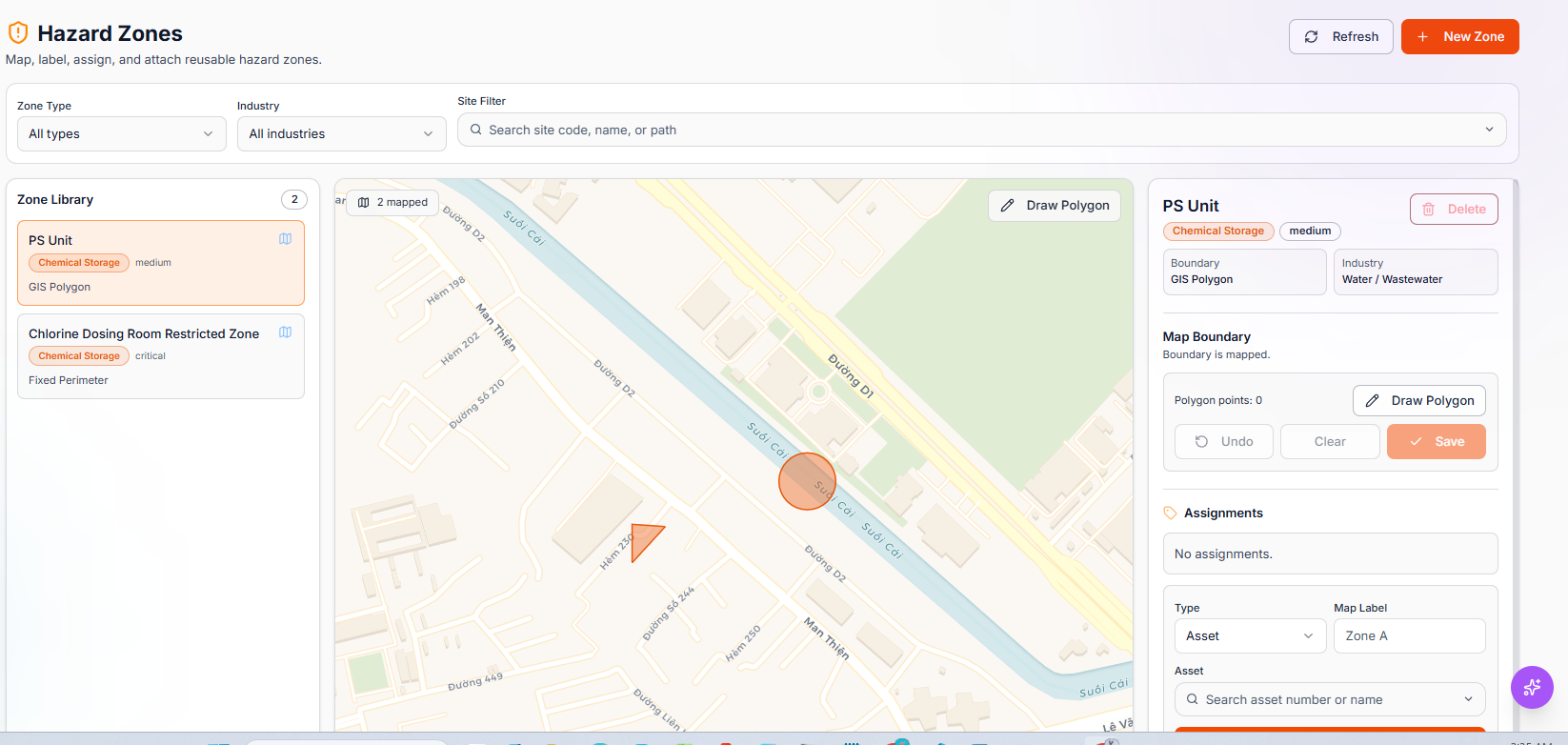
GIS hazard zone snapshot
Reusable hazard zones can be mapped, labeled, assigned, and tied to asset or site context for operational risk workflows.
Spatial capabilities
The spatial layer connects operations, not just map markers.
TwinEdge spatial intelligence connects EAM, twins, analytics, planning, and field work so teams can see where risk is building and where action should happen.
AssetOps GIS Map
Manage assets, work orders, PM inspections, telemetry, documents, alarms, service areas, and compliance zones in spatial context.
Network Twin GIS
Model water and wastewater networks with DMAs, pressure zones, hydrants, mains, valves, lift stations, backflow devices, leak polygons, burst candidates, and inspection routes.
Field and scheduling map
Use work-order geography, technician location, service areas, route lines, travel-time context, and dispatch planning inside field workflows.
Spatial queries and network trace
Radius, bbox, polygon, buffer, nearest, attribute, and network-trace surfaces help teams find what is affected and where to act.
Capital and hazard maps
Replacement plans, scheduled year, priority rank, risk, cost, hazard overlays, and project context connect spatial risk to capital strategy.
Layer studio and exchange
Import, export, saved views, basemaps, service areas, layer groups, vector-tile paths, map snapshots, and style controls support operational map management.
Formats and exchange
Bring geospatial data into the operational twin.
TwinEdge helps teams bring asset and network geography into operational workflows, analytics, inspections, risk views, and capital planning.
Enterprise GIS fit
Keep your GIS. Add operational context, work execution, and AI-ready spatial intelligence.
Works alongside enterprise GIS while making spatial context operational for maintenance, field work, twins, analytics, and planning.
Uses open exchange patterns such as GeoJSON, Shapefile ZIP, KML, GeoPackage, GPX, CSV/Excel coordinates, EPSG projections, XYZ basemaps, MapLibre, and vector-tile paths.
Connects map layers to asset records, telemetry state, alarms, work orders, inspections, documents, service areas, and capital plans.
Gives planners and field teams a shared spatial view without forcing a GIS rip-and-replace program.
Evaluate spatial intelligence
See how GIS context changes asset, field, compliance, and capital decisions.
Start with an AssetOps GIS map, a water/wastewater network twin, or a capital planning map tied to asset risk.